
Causes, Treatment and How Osteopathy Can Help
Written By: Bethany Elliott-Hutton, Registered Osteopath, GOSC 10178
Published: 22 October 2025 | Last reviewed: 16 February 2026 | Clinical Accuracy Verified
Low back pain is one of the most common musculoskeletal issues, affecting most of us at some stage in life. The encouraging news is that the lower back is naturally strong and resilient designed to support, stabilise, and move you through everyday life. With the right care, movement, and understanding, in most cases it can improve quickly and without long-term problems.
At Release Osteopathy, we work with patients to relieve discomfort and restore movement, while helping them understand how to keep their backs healthy, flexible, and strong for the future.
Understanding the anatomy of the Low Back
Your lower back, or lumbar spine, sits between the rib cage and the pelvis. It’s made up of five vertebrae (L1–L5), supported by discs, ligaments, joints, and layers of powerful muscles. These structures provide both strength and mobility, allowing you to bend, lift, and twist with control.
Because the lumbar spine carries much of your body’s weight, it can sometimes become strained or irritated but this doesn’t mean it’s weak. In most cases, back pain results from temporary mechanical stress rather than serious injury, and responds well to movement and manual therapy.
Common Causes of Low Back Pain
There are many factors that can contribute to low back discomfort, such as:
Muscle or ligament strain from overuse, awkward lifting, or sudden movement
Joint stiffness or irritation between the spinal vertebrae
Disc irritation or inflammation affecting nearby nerves
Postural fatigue from sitting or standing for long periods
Lifestyle influences such as low activity levels, stress, or disrupted sleep
In most cases, back pain is a signal that your body needs a bit of support not a sign of lasting damage.
Self-Care and Treatment Options
Most people find their back pain improves with gentle activity and small lifestyle changes. Helpful approaches include:
Staying active – light movement or walking promotes circulation and healing.
Stretching and mobility exercises – ease stiffness and build flexibility.
Heat therapy – helps relax tight muscles and improve comfort.
Postural awareness – small adjustments at work or home can make a big difference.
If discomfort continues, seeing an osteopath can provide targeted treatment to help your back recover and function at its best.
How Osteopathy Can Help
At Release Osteopathy, we view the spine as strong, adaptable, and capable of healing. Osteopathic care focuses on restoring balance and movement across the whole body not just the painful area.
Your osteopath will ask detailed questions about your general health, medical history, and daily habits. This helps to:
Screen for more serious conditions
Identify if pain may be originating from structures other than the spine (e.g., kidneys, reproductive organs, or abdomen)
Understand contributing factors such as posture, activity levels, and lifestyle
Treatment may include:
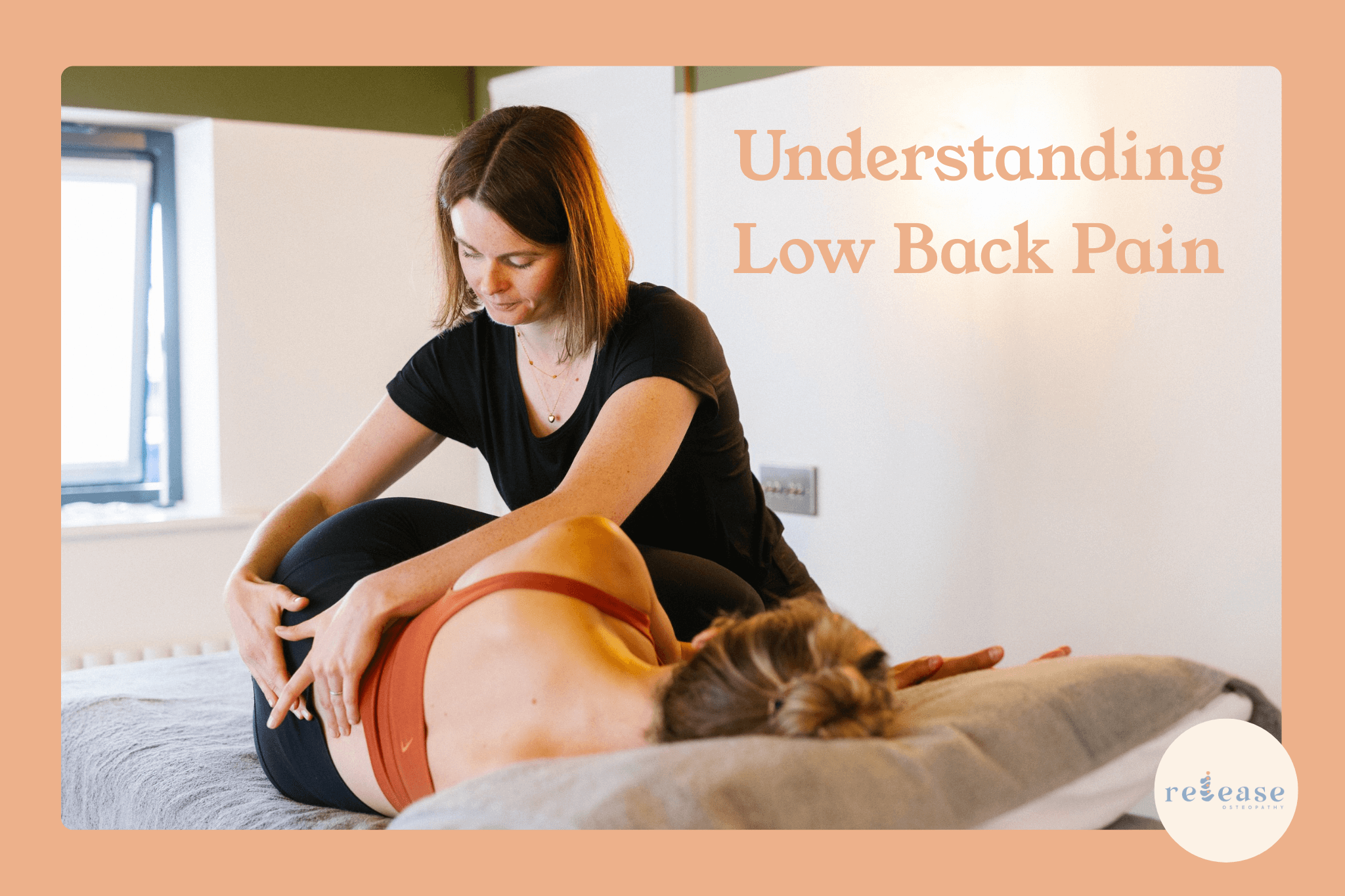
Gentle hands-on techniques to ease muscle tension
Joint mobilisation to improve spinal and pelvic mobility
Circulation and tissue release to support natural healing
Tailored advice on posture, activity, and self-care to prevent recurrence
We also assess how related areas such as the hips, pelvis, and upper back may be influencing your symptoms, helping you achieve lasting relief and confidence in your body’s strength.
When to Seek Help
While most low back pain settles within a few weeks, you should seek professional advice if it’s persistent, severe, or accompanied by symptoms like numbness, weakness, or pain radiating down the leg.
At Release Osteopathy, we take the time to understand your individual needs and design a treatment plan that supports recovery, movement, and long-term resilience.
Take the First Step Toward a Stronger Back
If you’re living with lower back pain or stiffness, we’re here to help you move freely again. Our experienced osteopaths will assess your posture, lifestyle, and movement patterns to create a personalised plan for relief, recovery, and prevention.