
The Benefits of an Anti Inflammatory Diet for Joint Health
If you live with osteoarthritis, you know that joint pain, stiffness, and reduced mobility can make everyday tasks a challenge.
As an osteopath, patients frequently ask me about non-pharmacological options for managing their symptoms. While joint preservation through manual therapy and exercise rehabilitation play important roles, addressing chronic, low-grade inflammation through diet is another effective strategy.
While food isn't a cure, transitioning to a Mediterranean-style, anti-inflammatory eating pattern, as recommended by the NHS, can help lower systemic inflammation, manage body weight, and support long-term joint health
Following guidance from NHS Live Well and UK health resources, focusing on whole, unrefined foods helps support your joints in two main ways:
Directly Reducing Inflammation: Foods rich in antioxidants, phytonutrients, and omega-3 fatty acids help reduce cellular damage and downregulate inflammatory pathways in the body.
Managing Joint Load: Maintaining a healthy body weight reduces mechanical stress on weight-bearing joints, particularly the hips, knees, and lower back, which can significantly ease daily discomfort.
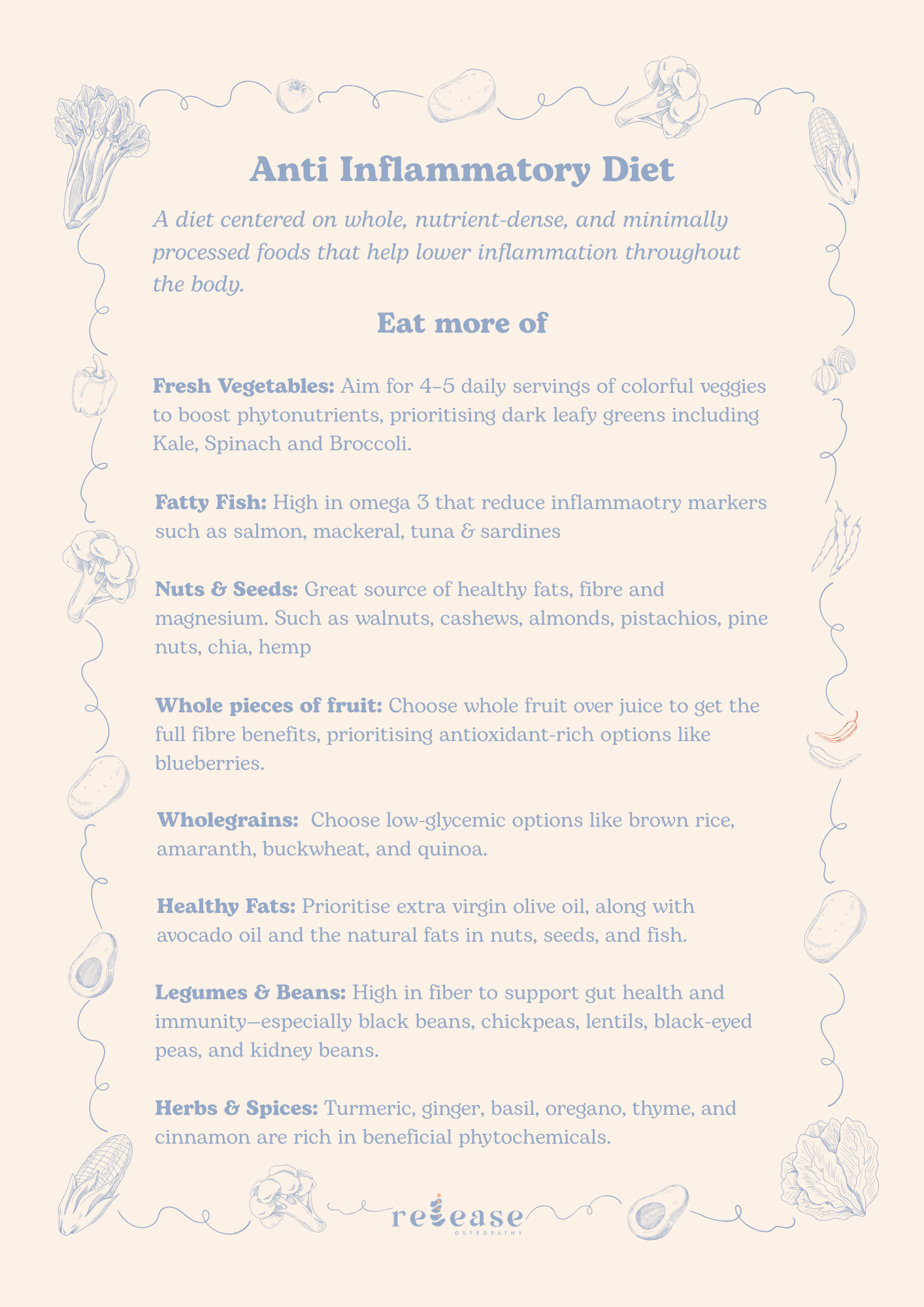
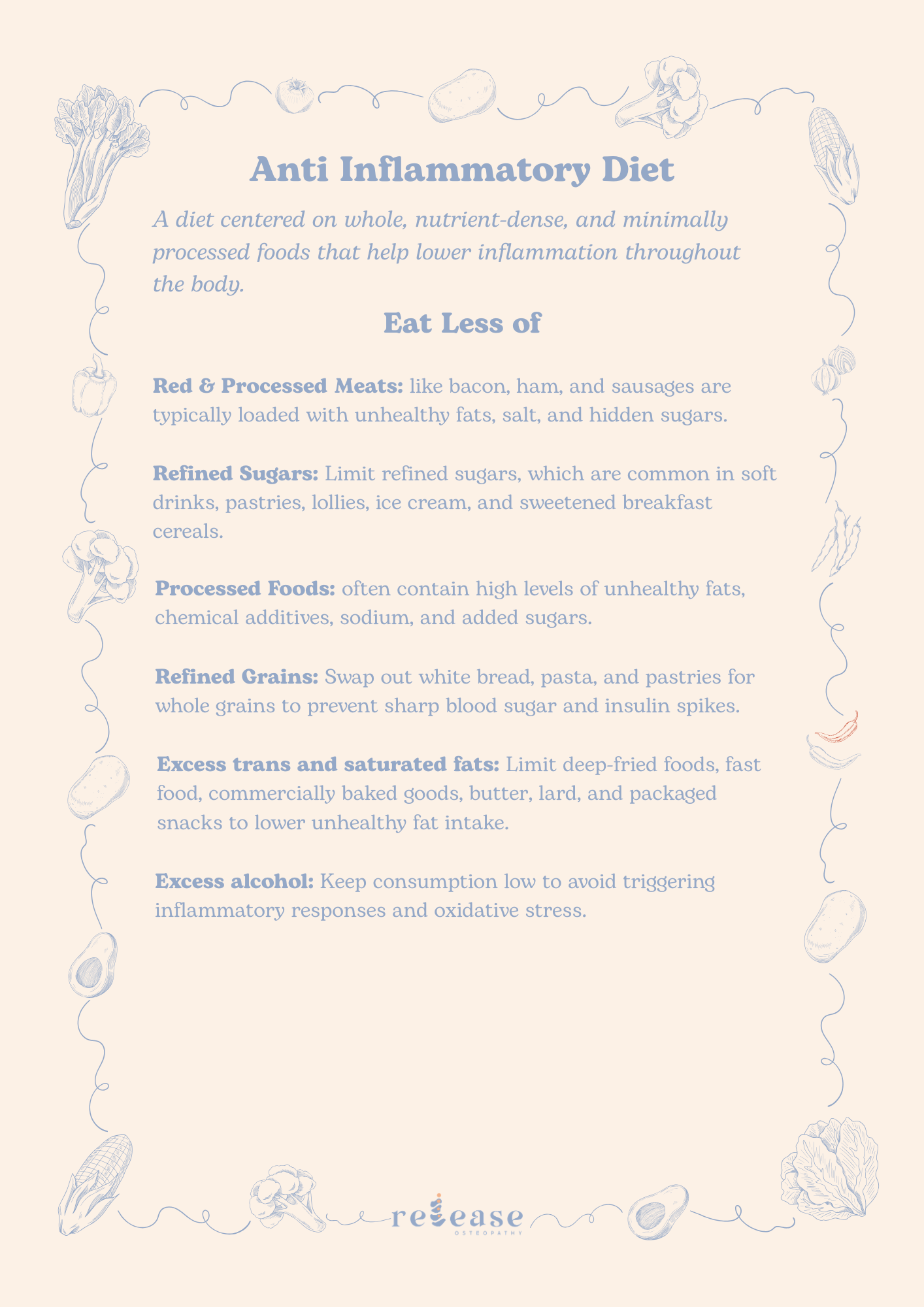
Have a read of the information leaflet below of foods to focus on and foods to avoid in an anti-inflammatory diet.
Helpful Resources:
https://patient.info/features/diet-and-nutrition/what-is-the-anti-inflammatory-diet
https://www.bhf.org.uk/informationsupport/heart-matters-magazine/nutrition/anti-inflammatory-diet
References:
Yu, X., Pu, H., & Voss, M. (2024). Overview of anti-inflammatory diets and their promising effects on non-communicable diseases. The British journal of nutrition, 132(7), 898–918.
Kasprzyk, N., Nandy, S. and Grygiel-Górniak, B., 2025. Diet in knee osteoarthritis—myths and facts. Nutrients, 17(11), p.1872.
Yang, F., Wang, Y., Li, Q., Feng, T. and Dai, W., 2025. The synergistic impact of anti-inflammatory and nutrient-rich dietary patterns on long-term prognosis among individuals with osteoarthritis. Archives of Medical Science.